TL;DR: A home-style respite setting may suit a child, teenager or adult with disability, especially when they prefer familiar routines, consistent carers and a calmer household environment. However, it is not automatically the right choice for every participant. The available home, facilities and support arrangements should match the person’s routines, preferences, mobility requirements, personal care needs, communication style and comfort level.
For many families, the question is not simply whether home-style respite is available. It is whether the available home, carer and routine feel suitable for the participant. Taking time to understand the person first helps everyone make a more careful decision.
What is Home Style Respite Care?
Home style respite is a personalised form of support delivered in a carer’s family home or another suitable home-like environment within the community. Instead of staying in a larger or more formal setting, the participant may spend time in a smaller household environment. The daily pace, meals, activities, downtime and level of support can be discussed around the person’s routines and preferences.
Depending on the participant and the available carer, a stay may include personal care, meals, social activities, community outings, familiar evening routines and time to relax. Where possible, regular stays may also allow the participant to build a consistent relationship with the same carer.
This does not mean that every home-style arrangement looks the same. One household may be quiet and suited to a participant who prefers a lower-stimulation environment. Another may suit someone who enjoys shared activities and a more social atmosphere.
Helpful reminder: A home-like environment should still be carefully matched to the participant. The household, carer, routine and support needs all matter.
Who May Benefit From Home Style Respite?
A home-style setting may suit children, teenagers and adults with disabilities. Age can influence the questions families ask, but it should not be the only factor considered.
Some participants may benefit from regular overnight stays, while others may prefer planned weekend respite that fits around family routines, school schedules or planned breaks.
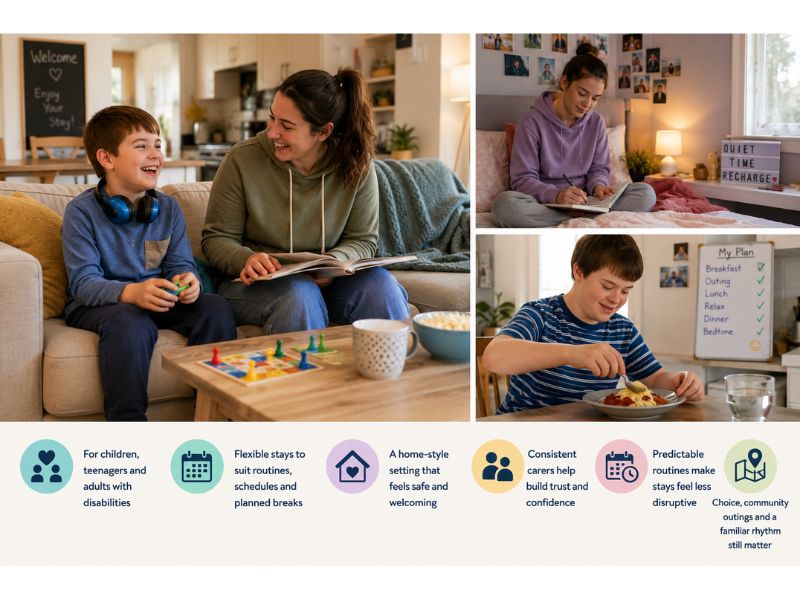
Consistency can also matter. Some participants need time to build trust with a new carer, especially before an overnight stay. A regular arrangement with the same carer, where possible, may feel more manageable than adjusting to unfamiliar people each time.
For example, a teenager who finds busy group settings overwhelming may prefer a household where there is space for quiet time after activities. A familiar dinner routine, a clear plan for the evening and a consistent carer may help the stay feel less disruptive.
An adult participant may have different priorities. They may want to choose their meals, enjoy a local outing and maintain a familiar daily rhythm while receiving the support they need. It can also be helpful for families and participants to understand what adult respite may involve before comparing different options.
How Do You Know If Home Style Respite Is a Good Match?
Home style respite may be a good match when the household environment, carer experience and available facilities align with the participant’s individual needs, routines and preferences. It may not be the most appropriate choice when the available home does not provide the right level of accessibility, privacy, specialised support or comfort.
This does not mean that a participant with complex needs is automatically unsuitable for home style respite. Some carers may have experience supporting mobility requirements, personal care needs, behavioural support needs, communication preferences or sensory considerations. Families may also find it helpful to understand the available safeguards for NDIS participants when comparing support arrangements. The decision should be made carefully and based on the individual participant.
For example, a family may explore a home-style arrangement and find that the available household includes stairs that do not suit the participant’s mobility requirements. Another participant may prefer more privacy than the proposed setting can offer. Someone else may need a different level of specialised support.
Recognising that the available setting is not the right match is not a failed enquiry. It shows that the participant’s needs have been considered properly.
Which Household Features Should You Ask About?
Families exploring home-style respite options on the Northern Beaches should look beyond location and ask whether the household environment suits the participant’s individual needs.
- How many people may be staying in the home?
- Will the participant have a private bedroom?
- Are there stairs, pets or pools at the property?
- Is there a quiet space for downtime?
- What does the usual household routine look like?
- Are the bathroom facilities, access points and room layouts suitable for the participant’s mobility requirements?
- Does the household environment suit the participant’s preferred pace and sensory needs?
- What safety procedures are in place?
A home-like environment should still be assessed carefully. Families may want to ask about working smoke alarms, first aid, emergency exits, hygienic spaces, appropriate supervision and opportunities to visit the home before the stay. Parents and guardians may also find it helpful to learn more about choosing safe respite care for children before comparing available settings. These questions help everyone decide whether the environment is likely to feel comfortable and manageable for the participant.
What Happens Before the First Stay?
Before the first stay, the participant, family or support coordinator should discuss the arrangement with the respite provider. This helps confirm whether the setting may be suitable. The process may include:
- An initial discussion about routines, preferences and support needs
- Information about personal care, mobility, dietary, medical and communication requirements
- Completion of an “About Me” form or similar participant profile
- Carer matching and compatibility checks
- A meet-and-greet at the carer’s home
- Discussion of any preparation or training needs
Feedback after the stay can help improve future arrangements.
How Can You Compare Home-Style and Other Respite Options?
When comparing respite options, consider more than location and availability. Ask whether the setting suits the participant’s needs, routines and preferences. Compare:
- Household size
- Privacy
- Accessibility
- Carer experience
- Supervision
- Routines
- Communication
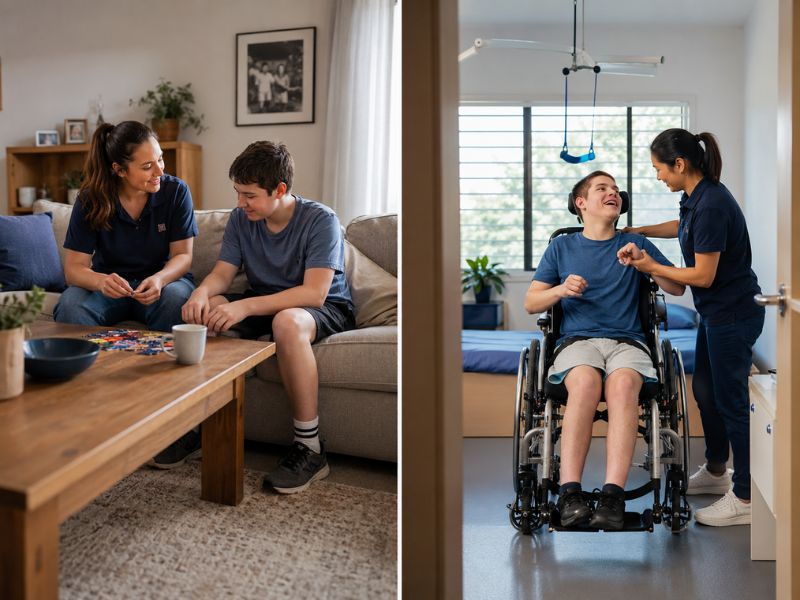
Some participants may prefer a smaller home-style setting. Others may need a more private arrangement or additional specialised support. Whether you are considering a one-off stay, regular overnight respite stays or weekend support, suitability should come first.
Finding a Suitable Respite Setting Takes Careful Matching
A home-style respite setting can be a comfortable and supportive option for a child, teenager or adult with disability. It may suit someone who prefers a smaller household environment, consistent carers, familiar routines or a calmer pace.
However, the setting still needs to match the participant’s individual needs. The available home, carer experience, facilities, routines and household features should be discussed carefully before the stay begins.
If you are comparing respite care options in Sydney, the Northern Beaches, the Central Coast or another part of NSW, it may be helpful to contact Our Family Respite for an initial discussion.
Our support is provided through a home-based model, so the match between the participant, carer and household is an important part of the conversation. Families can talk through routines, interests, personal care needs, mobility requirements, communication preferences and the type of home environment that may feel suitable.