- 02 4315 3529
- admin@ourfamilyrespite.com.au
- Mon - Fri: 9:00 - 17:00


Supports Daily Living & Independence
Families rarely need support that fits into one fixed model. Routines change, funding changes, and different stages of life often require different levels of care and flexibility. That is why our respite services are designed to work around real family life, not force families into systems that stop working the moment circumstances shift.
We provide a range of NDIS respite care options that can adapt around different routines, support needs, and personalities, helping families access support that feels more manageable, consistent, and sustainable over time.

Support designed to work within 1:2 and 1:3 models without compromising care.

Real homes, familiar routines, and lower overheads than traditional facilities.

Services that fit within actual funding, not ideal scenarios.

Support designed to work within 1:2 and 1:3 models without compromising care.

Support designed to work within 1:2 and 1:3 models without compromising care.
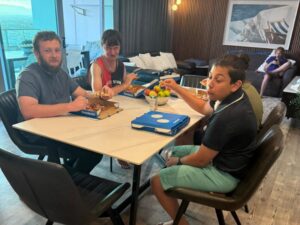
Our Family Respite provides disability respite care in a real home environment. NDIS participants stay with a suitable host carer in the carer’s family home, where support can feel more personal, calm and familiar.
We focus on matching each participant with a carer who can support their routines, comfort, personality and day-to-day needs. This helps families feel more confident that respite care is not just about finding a place to stay. It is about finding the right support environment.
A respite stay may include support with:
Every arrangement depends on the participant’s needs, funding, location and suitable carer availability. Contact Our Family Respite to discuss a suitable respite care arrangement for your child, teenager or adult family member.
Our respite care support is for children, teenagers and adults with disability who may benefit from short-term support away from their usual care arrangement.
Support for children who need a safe, calm and home-style environment, with care planned around their routines, comfort, communication needs and daily support.
Support for teenagers who may need privacy, routine, reassurance, social connection or help building confidence away from their usual home setting.
Support for adults with disability who may benefit from short-term respite, weekend stays, overnight care or flexible support in a matched home-style setting.
We work with families, parents, carers, guardians, participants and support coordinators. Some families are planning regular breaks, while others need weekend support, emergency respite or flexible backup care when circumstances change.
Our process is designed to help families feel informed before a respite stay begins. We take time to understand the participant’s needs, routines, preferences and support requirements before discussing whether a placement may be suitable.
Here is how our respite care process usually works:
1. Initial enquiry: We start with a phone call or enquiry to understand what kind of respite care your family needs.
2. Suitability discussion: We ask about the participant’s support needs, routines, communication, mobility, behaviour support, personal care and funding.
3. Carer matching: We look for a suitable host carer based on the participant’s needs, location, preferences and available carers.
4. Meet-and-greet: Where suitable, families may meet the carer and visit the home before the first stay.
5. Respite stay and review: After the stay, we value communication and feedback so future respite care arrangements can be adjusted where needed.
Our Family Respite is a registered NDIS provider. Respite care may also be referred to as Short-Term Accommodation, or STA, under the NDIS.
Depending on a participant’s plan, respite care may be funded through NDIS supports. Families can speak with us about their situation, their funding type and whether respite care may be suitable under their plan.
We can support enquiries from:
We use clear communication around funding, invoices and suitability so families and support coordinators understand the next step before a stay is arranged.
Choosing a respite care provider is a personal decision. Families want to know the participant will be supported by people who understand their needs, respect their routines and communicate clearly.
Our Family Respite focuses on home-style care, carer matching and personalised support. Our goal is to provide disability respite care that considers the person’s daily routines, emotional wellbeing, support needs and comfort.
We understand that respite can feel like a big step, especially if the participant has not stayed away from home before. That is why we take time to discuss the right fit before a stay begins.
Have a question or want to talk through your options? Our team is here to listen and help you figure out what support might work for your family.
NDIS respite care may be funded through a participant’s NDIS plan, depending on their goals, support needs and funding. It may also be referred to as Short-Term Accommodation, or STA.
Our Family Respite supports children, teenagers and adults with disability. Suitability depends on the participant’s needs, funding, location and whether a suitable carer match is available.
Yes. Some families use regular respite care so they can plan ongoing breaks and maintain a consistent support arrangement.
Yes. Urgent respite care may be available when a family faces illness, carer fatigue, breakdown in usual care, sudden support changes or other unexpected situations. Availability depends on suitability and carer matching.
We ask about the participant’s routines, support needs, communication style, preferences and location. We then look for a suitable host carer who may be able to provide the right home-style respite arrangement.
No. Our Family Respite has a strong focus on overnight respite and short-term accommodation, but support may also include weekend stays, regular respite, school holiday respite, urgent support or flexible arrangements where suitable.
Simple, practical articles to help families understand respite care, NDIS support, and options available for children with disability.