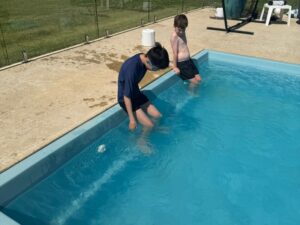
Ask how water safety will be managed, including access to water, individual support needs, supervision and emergency arrangements during respite. Even if swimming isn’t on the schedule, there may be a pool, spa or another water hazard at the proposed home. Discuss these details before agreeing to a stay.
When you’re getting to know a host, conversations naturally turn to bedrooms, meals, interests and familiar routines. You also need time to talk about the home itself, including outdoor areas and access to water during ordinary parts of the day.
What Water Hazards and Access Controls Should You Check at the Respite Home?
Check what water hazards are present, how someone could reach them and what controls are in place to prevent unintended access. Start with a simple question: “Is there a pool, spa, pond or other water hazard at or near the home?” If there is, ask the provider to explain access from the house and garden, including where you or the person you support would spend time.
For a home with a pool, useful questions include:
- Does the gate close and latch by itself, and how is its operation checked?
- Are fences, gates and latches maintained, with faults addressed promptly?
- Could furniture, branches or other objects provide climbing access?
- What compliance documentation applies to this property, and when was the setting last reviewed?
The applicable requirements should be checked for the property’s location. During an introduction, ask to see how the proposed arrangements work. For instance, if someone enjoys spending time in the garden, discuss how pool access would be managed while they are outside.
What Individual Needs Should Guide Water Safety During Respite?
Swimming experience, mobility, communication, sensory preferences and relevant health needs should inform the proposed arrangements.
Before choosing a water activity, discuss:
- Swimming experience: Explain where you or the person you support usually swims and what assistance is needed. Being comfortable in a familiar pool doesn’t establish that the same arrangements will work at a beach or in deeper water.
- Mobility and transfers: Describe any support needed to enter or leave the water, including accessible facilities and assistance with transfers.
- Communication: Explain how the person shows discomfort or distress and how carers can recognise those signals.
- Sensory preferences and comfort: Share any fears or sensitivities. For example, your teenager might enjoy swimming but find a crowded changing room overwhelming.
- Unexpected approaches to water: Let the provider know if the person might move towards water without warning, including when swimming isn’t planned.
- Relevant health needs and medication effects: Explain anything that may affect participation or the support required, supported by current professional advice where applicable.
- Professional instructions and equipment: Share existing instructions and recommended equipment before the stay so carers can discuss whether they can meet those needs.
Ask how this information will be recorded and made available to every carer involved.
Can Shared Support Meet Everyone’s Needs While Maintaining Water Safety During Respite?
It can, provided the agreed staffing allows each person to receive the supervision and assistance they need in and around water.
For water safety during respite, a general support ratio doesn’t explain whether a particular activity is suitable. Ask who will supervise each person, whether that carer needs to be in the water and what other responsibilities they would have at the same time.
Consider a proposed outing where one participant needs assistance leaving the pool while another needs continuous close supervision. Before agreeing, ask how both needs would be met. The arrangements may need additional support, a different activity or a change of timing.
Supervision also needs a clear handover. If the responsible carer needs a break or must help someone else, who takes over, and how will both carers confirm that responsibility has transferred?
At a public pool, lifeguards have responsibilities for the wider facility. Their presence does not replace active supervision of children by parents or carers. If a beach or waterway visit is proposed, ask how the different conditions affect the support required.
How Will Your Preferences About Water Activities Be Respected?
You should receive information you can understand, have time to consider the activity and be able to decline or change your mind.
Swimming might be something you look forward to, or something you’d prefer to leave out of the stay. Either way, discuss what you enjoy and what makes you uncomfortable. A previous willingness to swim doesn’t mean you’ll want to join every time.
For children and teenagers, parents can explain familiar preferences while helping carers hear the young person’s own views about what makes respite enjoyable for them. Adults choosing respite should be involved directly, with their chosen support people where wanted.
Explain how you or the person you support communicates “yes”, “no”, “help” and “stop”. This might involve speech, gestures, pictures or an AAC device. Ask how carers will recognise those messages and respond, including if someone becomes uncomfortable after entering the water.
If swimming is declined, discuss a suitable alternative within the agreed support arrangement. A familiar hobby or a quiet moment at home may be more appealing. When support is shared, confirm how that choice can be accommodated before the outing is organised.
What Emergency Arrangements and Carer Training Should You Check?
Ask about the relevant carers’ current training, the response planned for the setting and how emergency help would be contacted.
General care experience doesn’t tell you which first aid, CPR or water rescue competencies someone currently holds. Ask the provider to confirm the training relevant to the proposed activity and each person’s needs.
You can also ask how carers would raise the alarm, contact emergency services, provide the exact location and access suitable emergency equipment. If several participants are present, who would support the others while the emergency response takes place?
The NDIS Commission’s guidance on support environments includes participant-specific protocols for responding to medical emergencies. Ask how the provider’s arrangements address the water setting being considered.
It is reasonable to ask how families would be notified and how an incident would be recorded and reviewed. The aim is to understand the preparation in place before anyone needs to rely on it.
How Can You Plan for Water Safety During Respite?
Discuss the setting, individual needs, supervision, preferences and emergency preparation before confirming the stay.
You don’t need to arrive with a completed risk assessment. Start with what you know about yourself or the person you support, then ask the provider to explain how the proposed arrangements would work. Request clarification where an answer is vague, and make sure relevant decisions are recorded.

If the person returns to a familiar host, talk about how respite fits with their usual routine and mention changes in health, mobility, communication or comfort around water. An established relationship can help these conversations feel easier, while current information keeps the planning relevant.
If you’re exploring a short-term respite arrangement, consider contacting Our Family Respite with your preferred location, dates and water-related concerns. The team can discuss whether a matched host-carer home and its support arrangements may suit you or the person you support.